

Modelling pollutant exchanges between vegetation and the atmosphere in urban environments
Context and challenges
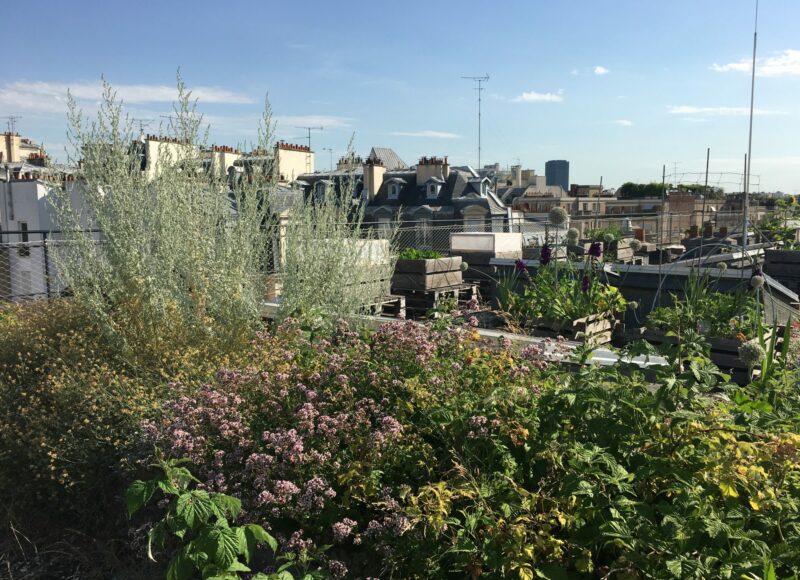
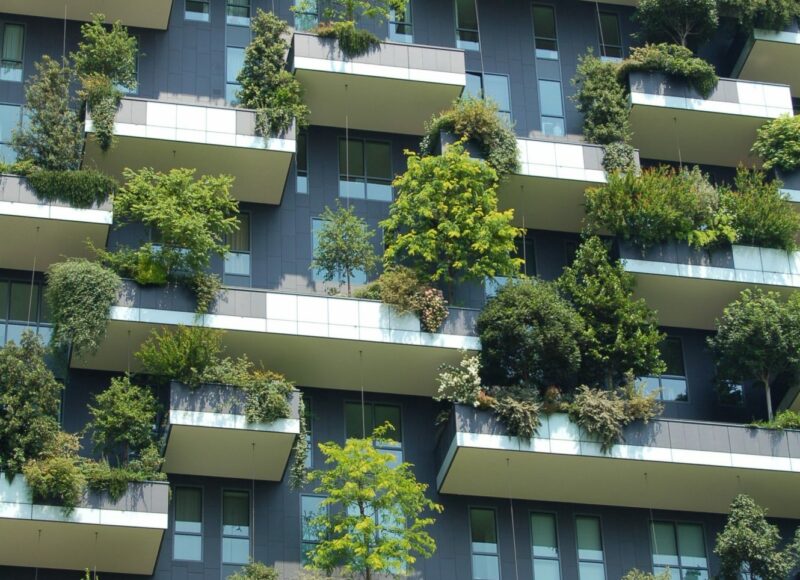
Air quality is today the leading cause of premature death in the world, a particularly serious problem in urban environments where the concentration of pollutants is higher. Among these pollutants, fine particles are of particular concern, as they present significant short- and long-term health risks. While urban vegetation is widely recognised for its role in mitigating urban heat islands and improving thermal comfort, its impact on air quality remains a subject of debate. Indeed, although plants can capture certain pollutants, the real effects of urban revegetation on air pollution require scientific clarification.
Objectives and methods
It is in this context that Aubin’s thesis is set, focusing on the modelling of atmospheric-pollutant exchanges between vegetation and the atmosphere in urban environments. The main objective is to quantify the impact of different revegetation scenarios on air quality in the city. To do so, he will use the SurfAtm model, developed by Erwan Personne and Patrick Stella, which has already been validated in rural settings for gaseous-pollutant exchanges. Aubin’s work will consist of adapting this model so that it takes into account the specificities of the urban environment, in particular its complex effects, and of integrating a particle-exchange module. During an end-of-studies internship, Aubin has already carried out preliminary work, developing a model of particle exchange between a meadow and the atmosphere, which enabled him to provide an initial proof of concept on the subject in a simplified environment.

UMR ECOSYS
- About
- Researchers
- Practitioner groups
- Research areas